
2026 Top Microbiology Cabinet Types for Global Buyers
Choosing the right Microbiology Cabinet in 2026 requires more than comparing prices, dimensions, or airflow ratings. Global buyers must consider specimen risk, operator protection, product protection, installation conditions, maintenance access, and local certification requirements. Class I cabinets may suit containment-focused work, while Class II A2 models support many routine microbiology applications. Class II B2 and Class III systems serve higher-risk or specialized environments. Each option has limits.
Dr. William A. Rutala, a respected infection-control and environmental-disinfection expert, has emphasized, “The goal of a biosafety cabinet is to protect the worker, the environment, and the product.” That principle still matters when laboratories compare modern Microbiology Cabinet designs. Airflow is not decoration. It determines safety.
This guide examines the leading cabinet types for hospitals, universities, pharmaceutical facilities, food laboratories, and industrial testing centers. It considers HEPA filtration, noise, energy use, ergonomic design, decontamination, and certification support. A cabinet can look impressive and still perform poorly after careless installation. That happens.
The discussion also recognizes practical uncertainty. Buyers may receive different recommendations from suppliers, consultants, and local inspectors. Product names can create confusion. “Clean” does not always mean “safe.” This outline therefore focuses on verifiable specifications, documented testing, and realistic laboratory workflows. The best choice is not always the most advanced model. Sometimes, a simpler cabinet fits the room, budget, and risk profile better. JSImport
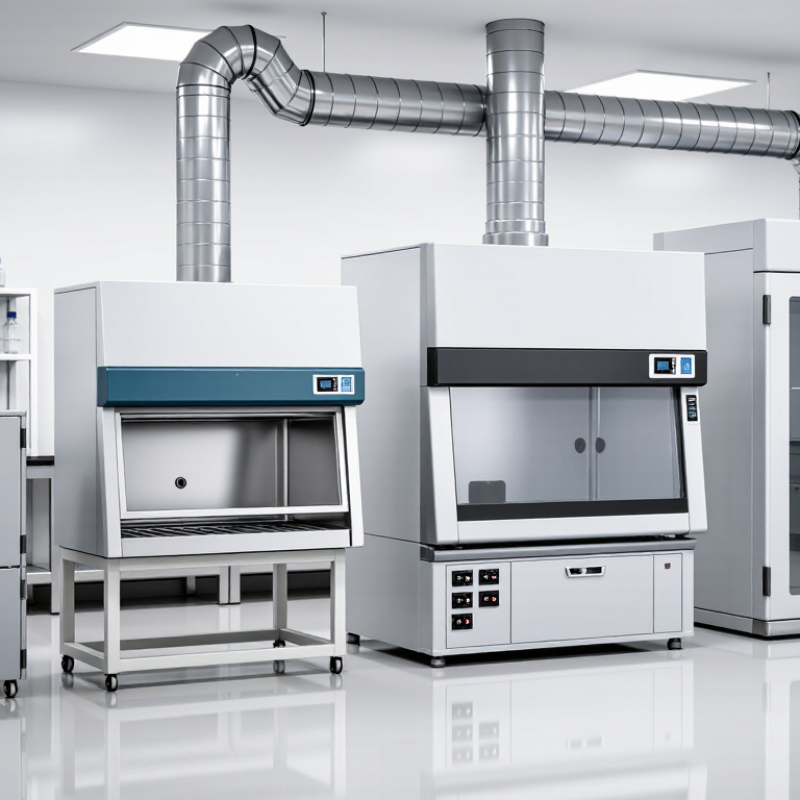
Microbiology Cabinets: Definition, Purpose, and Core Functions
A microbiology cabinet is an enclosed, ventilated workspace for handling biological materials. In practice, many buyers use “microbiology cabinet” to mean a biological safety cabinet, or BSC. Its purpose is threefold: protect personnel, protect samples, and reduce environmental release. These goals depend on cabinet class, airflow design, filter performance, and correct installation.
Class I cabinets protect workers and the room, but they do not protect open samples from contamination. Class II cabinets use inward airflow and filtered vertical airflow, supporting personnel, product, and environmental protection. Class III cabinets provide the highest physical containment through a sealed enclosure and glove ports. They are specialized systems. Not every cabinet fits every laboratory.
High-efficiency particulate air filtration is a core function, but filtration alone is not enough. Airflow must remain stable around the operator’s hands, containers, and working surface. The World Health Organization’s Laboratory Biosafety Manual, fourth edition, stresses risk assessment, certification, and documented maintenance before routine use. The CDC and NIH BMBL, 6th edition, also links containment equipment to procedure-specific risk controls. A 2024 Grand View Research analysis projects approximately 6.6% annual growth for the global biosafety cabinet market through 2030, reflecting rising laboratory capacity and stricter containment expectations. Market forecasts can shift. Buyers should verify local standards, noise levels, service access, and certification frequency before purchase. Fancy controls cannot repair poor technique.
Main Types of Microbiology Cabinets for 2026
Microbiology cabinets differ by the protection they provide. Class I cabinets protect personnel and the room, but they do not protect the working sample. Class II cabinets are more versatile. Their inward airflow, HEPA filtration, and front access support personnel, product, and environmental protection. This makes them common in clinical, teaching, and research laboratories.
Class II A1 and A2 models usually recirculate filtered air inside the cabinet. A2 designs offer stronger airflow control for many routine procedures. Class II B1 and B2 models require dedicated exhaust systems and careful building coordination.
Class III cabinets are gas-tight glovebox systems. They provide the highest containment level, but demand more complex operation, maintenance, and training.
Clean benches are often misunderstood. They protect samples from airborne contamination, not laboratory workers. They suit sterile preparation, but not hazardous microbiology work. In practical purchasing reviews, I check airflow certification, filter testing, noise, reach distance, lighting, and service access. Energy use also matters in 2026. A cabinet running continuously can affect operating costs.
Appearance can mislead. A quiet cabinet may still have poor airflow stability. A compact cabinet may restrict safe movement. One uncomfortable lesson: specifications do not replace site assessment.
Buyers should match the cabinet to the biological risk, workflow, room ventilation, local requirements, and staff competence. Independent certification after installation remains essential. Controls should be clear, alarms visible, and maintenance records easy to verify.
How Each Cabinet Type Supports Laboratory Safety
2026 Top Microbiology Cabinet Types for Global Buyers
How Each Cabinet Type Supports Laboratory Safety
Class I microbiology cabinets protect personnel and the room by drawing contaminated air inward. They suit procedures with low-to-moderate aerosol risks, but they do not protect open samples from room air. Class II cabinets add HEPA-filtered downflow, supporting personnel, product, and environmental protection. Type A2 models fit many routine cultures, while Type B2 models require dedicated exhaust and stronger facility planning. They are safer only when airflow, alarms, and exhaust connections remain stable.
Class III cabinets provide the highest physical containment through a sealed workspace and glove ports. They support work involving higher-risk biological materials, but operation is slower and training demands are greater. The World Health Organization’s Laboratory Biosafety Manual, 4th edition, organizes hazards into four risk groups and stresses documented, task-specific risk assessment. That principle matters more than cabinet popularity. A large cabinet can still be unsuitable.
Certification is not optional. NSF/ANSI 49 requires field certification at least annually and after relocation, repair, or filter replacement. The CDC/NIH Biosafety in Microbiological and Biomedical Laboratories, 6th edition, also emphasizes directional airflow, maintenance, and user training. In practical laboratory reviews, blocked grilles and overloaded work surfaces remain common failures. Small details matter. Buyers should verify airflow indicators, alarm testing, exhaust design, local servicing capacity, and electrical compatibility before purchase.
The uncomfortable point is simple: a cabinet may meet a standard today, yet protect poorly after careless installation or rushed daily use.
Key Features and Standards for Global Buyers
2026 Top Microbiology Cabinet Types for Global Buyers
Key Features and Standards for Global Buyers
Microbiology cabinets differ by protection purpose, airflow design, and installation environment. Class II Type A2 cabinets suit many routine culture procedures. They protect personnel, samples, and surrounding areas through inward airflow and HEPA filtration. Type B2 systems support work involving limited volatile chemicals, but they require dedicated exhaust connections. Clean benches protect samples only. They do not protect operators from biological hazards.
Global buyers should examine certification, not only product photos or airflow numbers. EN 12469 and NSF/ANSI 49 are widely referenced performance standards for microbiological safety cabinets. Local authorities may require additional electrical, ventilation, or workplace approvals. Check the cabinet’s testing method, filter efficiency, airflow alarms, noise level, and sash safety functions. A visible airflow display helps operators notice changes quickly. Annual certification and installation testing remain essential.
Practical details often decide long-term reliability. Confirm room pressure, exhaust capacity, door width, voltage, and service access before ordering. Stainless steel work zones clean easily, but sharp internal corners can still trap residue. That detail matters. Ask for factory test records and independent field certification. A cabinet can meet a standard yet perform poorly after incorrect installation. Buyers should also review replacement filter availability, training materials, and emergency procedures. Specifications are never perfect. Rechecking assumptions with local safety professionals is wise.
How to Select the Right Microbiology Cabinet for Your Lab
2026 Top Microbiology Cabinet Types for Global Buyers
Selecting the right microbiology cabinet starts with the hazard assessment, not the cabinet price. The WHO Laboratory Biosafety Manual, fourth edition, recommends matching containment controls to risk, procedure, and exposure route. A Class II A2 cabinet suits many routine culture and diagnostic workflows. It protects personnel, samples, and the surrounding room through inward airflow and HEPA-filtered exhaust. Class II B2 models may fit volatile toxic chemicals, but they need dedicated exhaust and stronger facility planning. Not every laboratory needs one.
Practical details matter. Measure the room first. Check door clearance, electrical capacity, exhaust routing, and service access. A cabinet that cannot be certified annually becomes a costly enclosure. NSF/ANSI 49 and EN 12469 provide useful performance frameworks for airflow, containment, and testing. CDC and NIH’s BMBL, 6th edition, also stresses certification, training, and documented operating procedures. Review airflow alarms, sash height, noise, vibration, lighting, and filter replacement intervals. Small annoyances become daily risks.
Market research should not replace engineering judgment. Grand View Research’s biosafety cabinet market analysis projects continued growth through the decade, driven by laboratory expansion and stricter containment expectations. That growth can encourage rushed purchasing. I have seen specifications look impressive while the cabinet poorly matched the room. Recheck the risk assessment with biosafety staff, facilities engineers, and actual users. Leave room for uncertainty. Your best choice may be less powerful, easier to certify, and more consistently used.
| Cabinet Type | Primary Personnel Protection | Product Protection | Environmental Protection | Typical Airflow Principle | Typical Working Width | Suitable Applications | Key Limitations | Typical Exhaust Requirement | Common Selection Priority | Indicative Protection Level |
|---|---|---|---|---|---|---|---|---|---|---|
| Class I Biological Safety Cabinet | Yes, by drawing room air inward through the front opening and filtering the exhaust. | No. Room air passes over the work before entering the exhaust system. | Yes, when fitted with an appropriate exhaust filter and operated correctly. | Inward airflow across the work zone; filtered exhaust. | Approximately 900–1800 mm | Work involving potentially contaminated materials where product sterility is not required; aerosol-generating procedures with low product-protection needs. | Not appropriate for sterile culture preparation or procedures requiring protection of open samples from room contamination. | Usually ducted or configured with a filtered exhaust arrangement, subject to local design requirements. | Personnel and environmental protection at a comparatively simple installation level. | Personnel: High Product: Low Environment: High |
| Class II Type A1 | Yes, through inward airflow at the front opening. | Yes, through vertical HEPA-filtered downflow over the work surface. | Yes, through HEPA-filtered exhaust. | Recirculated HEPA-filtered downflow with inward inflow; minimum inflow is commonly around 0.38 m/s under applicable performance requirements. | Approximately 900–1800 mm | Routine microbiology, cell culture, clinical sample handling, and work with biological agents that do not generate significant quantities of volatile toxic chemicals or radionuclides. | Not designed for substantial volatile chemical use; exhaust arrangements must not allow hazardous vapors to accumulate in the room. | Often suitable for room-return exhaust, depending on the certified configuration and local regulations. | Balanced protection, broad availability, and relatively straightforward installation. | Personnel: High Product: High Environment: High |
| Class II Type A2 | Yes, through inward airflow at the front opening. | Yes, through vertical HEPA-filtered downflow. | Yes, through HEPA-filtered exhaust. | Part of the filtered airflow is recirculated inside the cabinet; inward inflow is commonly around 0.50 m/s under applicable performance requirements. | Approximately 900–1800 mm | General microbiology, diagnostic procedures, cell culture, molecular biology, and routine work with infectious materials. | Volatile toxic chemicals and radionuclides should generally be avoided unless the cabinet is specifically designed, certified, and properly exhausted for that use. | Can be room-return or canopy-connected, depending on the certified cabinet design; direct hard-ducting requires careful engineering. | Best all-purpose choice for many microbiology laboratories. | Personnel: High Product: High Environment: High |
| Class II Type B1 | Yes, through inward airflow and controlled cabinet airflow. | Yes, through HEPA-filtered downflow, with the work zone arranged to limit contamination risk. | Yes, with a dedicated exhaust path for the applicable airflow portion. | Partial exhaust of cabinet air through a dedicated duct; the remaining airflow is recirculated through HEPA filtration. | Approximately 1200–1800 mm | Selected procedures involving limited quantities of volatile toxic chemicals or radionuclides, together with biological materials, when validated by the laboratory. | Requires specialized design, dedicated exhaust, and strict operating procedures. It is not a universal substitute for a chemical fume hood. | Dedicated hard-ducted exhaust is normally required. | Combined biological protection with limited chemical-use capability. | Personnel: High Product: High Environment: High |
| Class II Type B2 | Yes, through inward airflow at the front opening. | Yes, through HEPA-filtered downflow across the work area. | Yes, through total exhaust of cabinet airflow after filtration and suitable exhaust treatment. | 100% exhaust cabinet; no internal recirculation of contaminated cabinet air. | Approximately 1200–1800 mm | Work combining biological hazards with significant quantities of volatile toxic chemicals or radionuclides, when specifically risk-assessed and approved. | Highest installation complexity, energy use, and operating cost among common Class II configurations. Loss of exhaust can require immediate work stoppage. | Dedicated, continuously monitored hard-ducted exhaust with building HVAC coordination. | Maximum combined biological and chemical containment within a Class II design. | Personnel: High Product: High Environment: High |
| Class III Biological Safety Cabinet | Very high, because the work zone is gas-tight and operated through attached glove ports. | High, when materials are transferred through validated pass-through systems and procedures. | Very high, with filtered exhaust and a closed work system. | Gas-tight enclosure maintained under negative pressure; air enters through supply filtration and exits through validated exhaust filtration. | Commonly 600–1800 mm, depending on modular system design | High-containment microbiology, specialized pathogen research, and procedures requiring maximum physical separation from the operator. | Restricted dexterity, slower material transfer, higher capital cost, and demanding decontamination and maintenance requirements. | Dedicated exhaust system with validated filtration and facility-level containment controls. | Maximum containment where the hazard assessment requires a fully enclosed cabinet. | Personnel: Very High Product: High Environment: Very High |
| Clean Bench / Laminar-Airflow Workstation | No. It is not intended to protect the operator from biological hazards. | Yes, for suitable non-hazardous work, through HEPA-filtered unidirectional airflow. | No, because the airflow may discharge aerosols toward the operator or room. | Horizontal or vertical HEPA-filtered unidirectional airflow across the work zone. | Approximately 900–1800 mm | Non-hazardous sterile assembly, media preparation without biological risk, and protection of clean components. | Must not be used for infectious agents, human clinical specimens, toxic chemicals, or procedures that generate hazardous aerosols. | Usually room-return; it is not a substitute for a biological safety cabinet. | Product cleanliness only, when personnel and environmental containment are not required. | Personnel: None Product: High Environment: None |
| PCR Workstation / Nucleic-Acid Workstation | Usually limited or none; protection depends on the specific design and workflow. | Yes, for reducing contamination during pre-amplification or clean nucleic-acid preparation. | Generally not intended for infectious or aerosol-generating biological work. | HEPA-filtered airflow, often combined with ultraviolet or chemical decontamination features where permitted by the design. | Approximately 600–1500 mm | Pre-PCR reagent preparation, DNA/RNA setup, and contamination control in molecular workflows. | Not a replacement for a certified biological safety cabinet when handling infectious samples or hazardous aerosols. | Usually no dedicated exhaust; verify the specific equipment design and laboratory risk assessment. | Prevention of amplicon contamination in molecular biology workflows. | Personnel: Limited Product: High Environment: Limited |