What is EV Charging Connector Types and Their Benefits?
The EV Charging Connector landscape is rapidly evolving, reflecting the swift growth of the electric vehicle market. According to the International Energy Agency, global electric car sales surpassed 6.6 million in 2021, representing a significant increase. As demand grows, the diversity of EV Charging Connectors has expanded. Different regions and manufacturers have their own standards, leading to complexity in charging solutions.
Understanding the various types of EV Charging Connectors is essential for consumers and industry stakeholders. Level 1, Level 2, and DC fast chargers denote differing charging speeds and uses. The United States predominantly utilizes the SAE J1772 connector for Level 1 and Level 2 charging, while Tesla employs its own proprietary connector. Meanwhile, CCS (Combined Charging System) has become prevalent in Europe, offering fast charging capabilities.
Recognizing these differences is crucial for making informed decisions. The reliability of charging infrastructure influences EV adoption rates. Distinct connector types can complicate the charging experience. Misunderstanding connector compatibility may lead to frustration, highlighting a gap that needs addressing as the market matures. Understanding the nuances of EV Charging Connectors will position users to navigate this evolving landscape effectively.
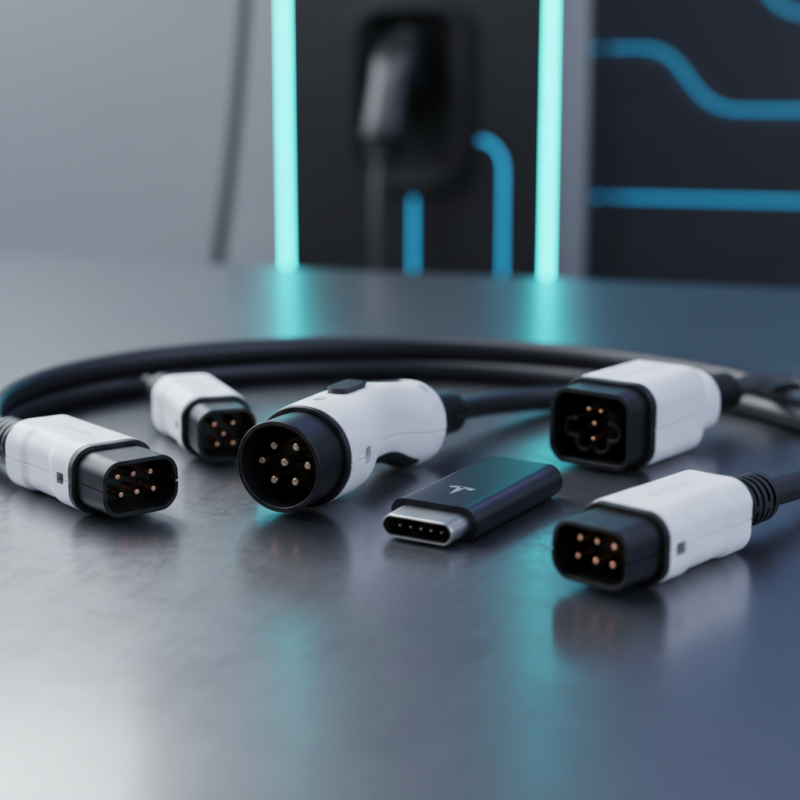
Overview of EV Charging Connectors and Their Importance
Electric vehicle (EV) charging connectors play a crucial role in the widespread adoption of electric mobility. With the growth of the EV market, the demand for efficient and reliable charging solutions has surged. According to a report by the International Energy Agency (IEA), the number of public charging points worldwide surpassed 1.3 million in 2021, highlighting the need for standardized charging systems.
Different types of connectors exist, each catering to various charging speeds and vehicle models. The most common types include Type 1, Type 2, CHAdeMO, and CCS. Type 2 connectors are widely used in Europe, where they support faster AC charging. In contrast, CCS connectors are gaining popularity for their DC fast charging capability. These distinctions are essential for both manufacturers and consumers to ensure compatibility and accessibility.
Despite the advancements in connector technology, challenges remain. The lack of uniform standards complicates the charging landscape. Many EV owners experience “range anxiety” due to the uneven distribution of charging stations. According to a survey by Deloitte, 34% of potential EV buyers cited limited charging infrastructure as a primary concern. Enhancing connector types and expanding charging networks is vital to alleviate these worries and promote electric vehicle adoption.
Types of EV Charging Connectors: A Comprehensive Guide
Electric vehicle (EV) charging connectors come in various types, each with unique benefits. Understanding these types is essential for EV owners. The most common connectors include Type 1, Type 2, CHAdeMO, and CCS. Type 1 connectors are primarily used in North America. They offer a simple design, making them easy to use. Type 2 connectors are prevalent in Europe, supporting both AC and DC charging. This versatility is beneficial for different charging scenarios.
CHAdeMO is widely recognized for fast charging capabilities, especially in Japan. Its rapid charging can significantly reduce downtime for drivers. CCS, or Combined Charging System, merges AC and DC charging in one connector. This feature enhances convenience and reduces the number of charging stations needed. While all connectors serve their purpose, choosing the right type depends on your circumstances.
In some cases, the availability of certain connectors may be limited in specific regions. As EVs become more popular, it’s vital to consider future-proofing your choice. You might find that local infrastructure affects your experience. Evaluating connector types based on personal and geographic needs can lead to better decision-making. Balancing these factors is key to maximizing your EV ownership experience.
Benefits of Different EV Charging Connector Types
Electric vehicle (EV) charging connectors come in various types, each with unique benefits. Understanding these can guide users in selecting the right charging solution. The most common types include Type 1, Type 2, CHAdeMO, and CCS. Each connector serves distinct needs based on vehicle design and charging speeds.
Type 2 connectors are prevalent in Europe, allowing three-phase charging. This increases power delivery up to 22 kW. According to a report by the International Energy Agency, the majority of charging stations in Europe utilize this standard. In contrast, CHAdeMO connectors excel in delivering high-speed charging, making them favored in Japan. They support up to 62.5 kW, providing quick turnaround for busy users.
The Combined Charging System (CCS) is a rising star. It combines AC and DC charging in one plug, allowing for versatile options. CCS can handle up to 350 kW of power. However, the inconsistency in global adoption raises questions about future interoperability. As charging infrastructure develops, ensuring compatibility across different types remains critical. These nuances are vital for users navigating the evolving EV landscape.
Factors to Consider When Choosing an EV Charging Connector
Choosing the right EV charging connector is crucial for efficiency and compatibility. When selecting a connector, consider your vehicle’s specifications. Different EVs use various types, like Type 1 or Type 2 connectors. According to a report from the International Energy Agency, the global share of electric vehicle sales has reached a record 10% in 2022. This increase highlights the importance of understanding connector types.
Another key factor is charging speed. Connectors like CCS (Combined Charging System) support fast charging. Research shows that CCS can offer up to 350 kW of power. However, not all installations can handle such capacities. Home chargers may only support lower power levels. This discrepancy can lead to frustration for users who expect fast charging at home.
Additionally, consider the availability of charging stations. Different regions may favor specific types of connectors. For instance, some areas predominantly use Type 2 connectors. According to the Electric Vehicle Charging Association, over 70% of public charging stations in Europe utilize Type 2 cabling. It’s essential to assess local infrastructure to avoid being left without a charge.
What is EV Charging Connector Types and Their Benefits? - Factors to Consider When Choosing an EV Charging Connector
| Connector Type | Charging Speed | Compatibility | Benefits | Considerations |
| Type 1 (J1772) | 1.4 kW - 7.2 kW | North America | Widely used, standard for many EVs | Limited to lower power outputs |
| Type 2 (Mennekes) | 3.7 kW - 22 kW | Europe | Supports three-phase charging, faster charging | Requires compatible infrastructure |
| CCS (Combined Charging System) | 50 kW - 350 kW | North America and Europe | Fast charging capabilities | Infrastructure may be limited in some areas |
| CHAdeMO | 50 kW | Japan and some global markets | Used by several manufacturers, reliable | Compatibility mainly in specific models |
Future Trends in EV Charging Connector Technology
As the demand for electric vehicles (EVs) grows, innovations in charging connector technology are crucial. New advancements are reshaping how we think about EV charging. Standardization is one trend emerging in response to the diverse connector types currently available. This will simplify charging for users and reduce confusion at charging stations.
Another significant development is the shift towards ultra-fast charging connectors. These high-powered connectors can deliver substantial energy in less time. They are particularly beneficial for long-distance travel. However, availability remains a challenge. Not all charging stations are equipped with ultra-fast options.
Wireless charging is also gaining traction. It eliminates the need for physical connectors, making the charging process more convenient. Still, this technology faces hurdles, including efficiency and installation costs. As the market evolves, it will be essential to address these challenges. User needs and infrastructure will heavily influence future advancements.
EV Charging Connector Types and Their Benefits