How to Choose Eva Deck Flooring for Your Boat?
Choosing Eva Deck Flooring for a boat involves more than matching color and texture. The right surface must handle water, sunlight, salt, footwear, and repeated impact. According to the National Marine Manufacturers Association’s 2023 U.S. Recreational Boating Statistical Abstract, approximately 11.6 million recreational boats were registered in the United States. That large installed base reflects a practical demand for safer, more comfortable, and easier-to-maintain deck materials.
Eva Deck Flooring is popular because closed-cell foam provides cushioning and water resistance. It can reduce foot fatigue on fishing boats, pontoons, and yachts. However, product quality varies considerably. Check foam density, adhesive performance, UV resistance, thickness, and surface texture. A soft pad may feel pleasant at the dock. It may compress too quickly under coolers, seats, or fishing equipment. That matters.
Look beyond appearance.
Industry evaluations, including marine flooring analyses from Grand View Research, highlight durability, installation, and maintenance as important purchasing factors. These findings support a careful comparison rather than a purely visual decision. The American Boat and Yacht Council also publishes technical standards that encourage responsible marine design and installation practices, although those standards do not approve every flooring product.
Measure the deck accurately. Inspect drainage channels and raised fittings. Consider whether your boat stays in direct sunlight or under cover. Adhesive compatibility deserves special attention, especially on older fiberglass or painted surfaces. I have seen attractive installations fail because the substrate was damp or poorly prepared. That mistake is easy to underestimate. There is no perfect flooring choice. The best Eva Deck Flooring balances comfort, grip, cleaning needs, appearance, and realistic boating conditions.
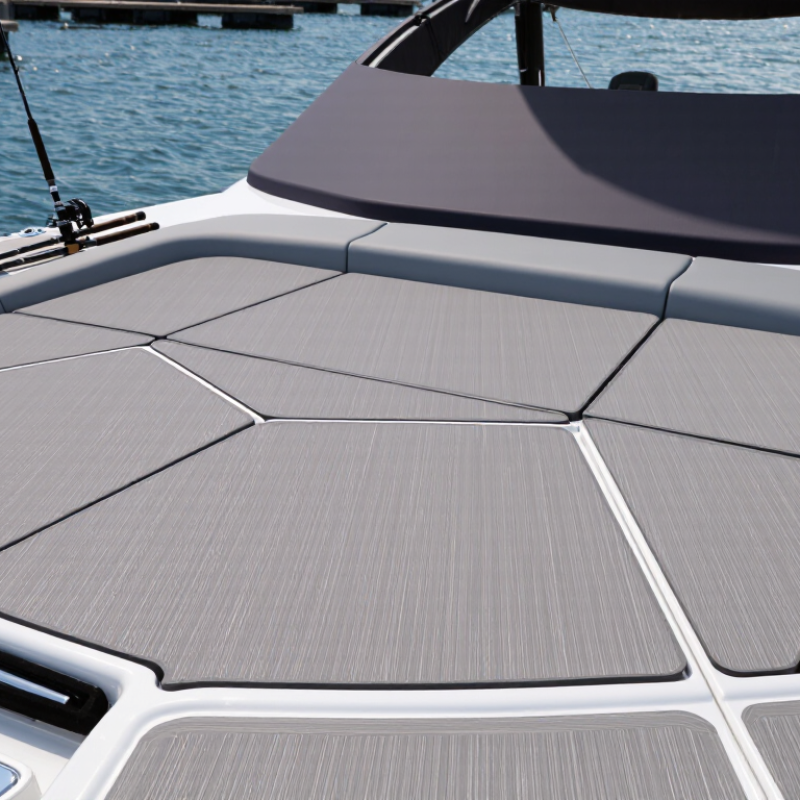
Understanding EVA Deck Flooring and Its Benefits for Boats
EVA deck flooring is a closed-cell foam surface designed for comfort, traction, and everyday marine use. Its soft texture reduces foot fatigue during long hours at the helm or while fishing. It also cushions knees when someone kneels on a wet deck. The material resists water absorption, so small splashes usually do not make it heavy or soggy. It feels practical.
Color and texture affect safety. A lightly patterned surface can provide grip without feeling harsh under bare feet. Dark colors may become hot under strong sunlight, while lighter shades can show dirt more quickly. That trade-off is easy to underestimate. EVA foam also helps reduce noise from dropped tools and movement across the deck.
Before choosing a product, measure every section carefully and inspect the surface condition. Dust, wax, oil, and loose paint can weaken the adhesive bond. Clean, dry, and smooth preparation matters more than many buyers expect. Test a small sample in direct sun and salty conditions when possible. Check whether the thickness suits hatches, drains, and moving parts. Too much thickness can cause interference. Poor drainage can also leave water trapped near seams.
In my view, installation quality deserves as much attention as foam density. Tight joins look better, but slight gaps may support drainage around complex fittings. EVA is durable, not indestructible. Sharp hardware, dragging coolers, and neglected cleaning can damage it. A soft brush and mild soap are usually safer than aggressive solvents. I would also recheck edges after a season, because heat and repeated moisture can reveal weak bonding.
How to Choose EVA Deck Flooring for Your Boat?
Typical EVA deck-flooring thickness recommendations by boat area. Thicker sheets generally provide more cushioning and wear resistance, while thinner sheets reduce weight and are easier to fit around curves.
These values represent common practical starting points: 3 mm for lightly walked areas, 5 mm for general deck use, and 6 mm for high-traffic or impact-prone zones. Always confirm thickness, adhesive compatibility, UV resistance, and closed-cell construction with the product datasheet.
Comparing EVA Foam Materials, Textures, Colors, and Thicknesses
How to Choose EVA Deck Flooring for Your Boat?
EVA foam differs by density, vinyl acetate content, and cell structure. Closed-cell foam resists water better than open-cell alternatives. Technical testing under ASTM D3575 commonly places marine-grade EVA density around 60–180 kg/m³. Higher density usually feels firmer and lasts longer. It can also feel less forgiving under bare feet.
A 2024 market review by Grand View Research expects EVA foam demand to grow near 6% annually through the decade, reflecting wider use in marine and outdoor products.
Texture affects grip, cleaning, and comfort. Brushed or diamond patterns improve traction when the deck is wet. Deep grooves drain water, but they can trap sand and fish scales. Smooth textures clean easily, though they may become slippery with sunscreen. The U.S. Coast Guard reported 4,064 recreational boating accidents in 2023. A secure walking surface deserves more attention than appearance alone. Test a sample with wet feet.
Color changes more than style. Dark shades absorb heat and may become uncomfortable in direct sun. Light gray reduces heat, but stains show quickly.
Thickness also requires judgment. Five-millimeter sheets suit protected seating areas. Eight to ten millimeters provide better cushioning on standing decks. Thicker foam can interfere with hatches and fasteners. Measure clearance first.
I would not choose the thickest option automatically. A firm, well-bonded six-millimeter pad may outperform a soft ten-millimeter sheet. That assumption still needs testing on your deck.
Choosing the Right Installation Method and Customization Options
How to Choose Eva Deck Flooring for Your Boat?
Choosing the right installation method starts with the deck surface. EVA flooring adheres best to clean, dry, and lightly prepared fiberglass, aluminum, or painted surfaces. Remove wax, oil, loose paint, and salt residue before measuring. A smooth surface matters.
For permanent coverage, marine-grade adhesive offers strong bonding in busy areas, such as helm steps and swim platforms. Pressure-sensitive backing is faster and cleaner, but it demands careful alignment. Once pressed down, repositioning becomes difficult. Leave enough space around hatches and drainage channels. Water trapped beneath the foam can weaken adhesion over time. Test-fit every panel with paper templates before removing the backing film. Small errors become obvious around corners.
Customization should support safety, not only appearance. Choose a thickness that feels comfortable under bare feet while allowing locker lids to open freely. Textured surfaces can improve grip near wet boarding areas. Dark colors may absorb more heat in direct sunlight, while lighter shades show stains more easily. Consider two-tone layouts for walkways, seating zones, and step edges. A contrasting border can improve visibility without looking excessive. Cutouts for hinges, rails, and drainage holes should be measured twice.
I once underestimated a curved bow section. The panel looked accurate on the bench but lifted slightly at the edge. A flexible template would have helped. Boat decks are rarely perfectly flat, so careful fitting remains more important than attractive digital designs. Temperature also affects installation. Apply the flooring during moderate weather, then press each section firmly, especially along narrow edges.
Evaluating Durability, Maintenance Needs, Safety, and Overall Value
Choosing EVA deck flooring for a boat starts with real deck conditions, not attractive color samples. During installations, I have seen foam that looked excellent indoors become faded near the swim platform. Check the material’s resistance to sunlight, saltwater, fuel splashes, and repeated foot traffic. Closed-cell EVA foam usually absorbs little water, but its surface can still wear around helm seats and boarding areas.
Durability matters because replacement involves more than buying new sheets. Removing old adhesive can be slow and may damage the deck surface. Look for stable foam thickness, dependable adhesive backing, and precise cutting around hatches. Ask for a sample, then leave it outside for several weeks. This simple test will not predict every season, but it can reveal curling edges or color changes. My earlier mistake was judging quality by softness alone.
Maintenance should remain practical. Rinse away salt after trips, use mild soap, and avoid harsh solvents that may weaken the texture or adhesive. A textured surface can improve grip when the deck is wet, especially near ladders and fishing areas. However, deeper grooves may hold dirt and fish residue. Safety also depends on installation; loose corners can catch toes, while poorly fitted seams may collect water. Compare the purchase price with expected service life, cleaning effort, repair access, and replacement difficulty. The cheapest option can become expensive when it needs frequent patching.