
10 Tips for Buying Engine Control System Parts

Buying Engine Control System Parts requires more than matching a part number. A failed sensor, damaged wiring connector, or unsuitable engine control unit can create rough idling, poor fuel economy, and expensive diagnostic delays. The vehicle may still start, but its data can already be unreliable. That detail is easy to miss.

Industry data shows why careful selection remains important. The International Energy Agency reported more than 14 million electric car sales worldwide in 2023. However, millions of internal-combustion vehicles still operate across global markets. The U.S. Environmental Protection Agency also identifies onboard diagnostics as an important tool for monitoring emission-related systems. These findings support a practical point: engine control components must match the vehicle’s calibration, emissions standard, production year, and communication network.

Professor Richard Stone, author of Introduction to Internal Combustion Engines, explains the engine as a system that converts chemical energy into mechanical work. His engineering perspective matters because modern control parts influence that conversion continuously. A small sensor error can change injection timing, ignition behavior, or air-fuel control.

This guide presents ten practical tips for buying Engine Control System Parts. It considers compatibility, supplier documentation, testing, warranty coverage, and installation risks. Expect some imperfect choices. Even experienced technicians can trust a familiar brand too quickly. A cheaper throttle-position sensor may look identical on a workbench. It may send unstable readings after several weeks.

Reports offer direction, not certainty. Real-world inspection still matters. Verify every specification before payment.
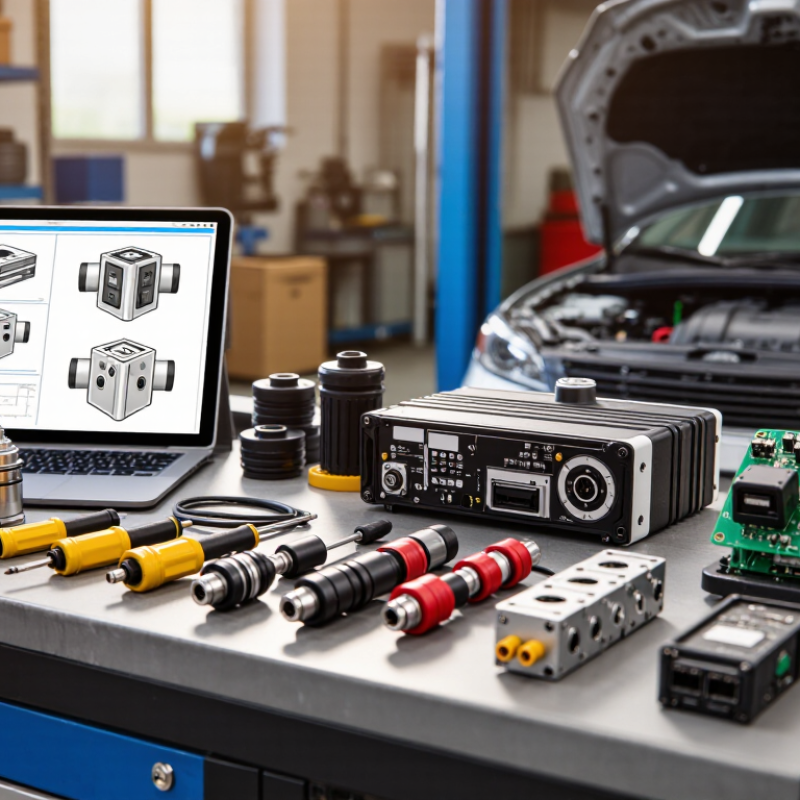
10 Tips for Buying Engine Control System Parts

Understanding Engine Control System Parts and Their Functions

Understanding Engine Control System Parts and Their Functions

An engine control system is a coordinated network, not a single replacement box. The electronic control unit processes data from sensors and adjusts engine operation. Crankshaft sensors track speed and position. Oxygen sensors monitor exhaust conditions. Temperature sensors help control fuel delivery during cold starts. Throttle actuators regulate airflow when the driver presses the pedal.

Each part must match the engine’s specifications and communication system. Check the vehicle identification details, engine code, connector shape, and calibration requirements before buying. A visually similar sensor may send incorrect signals. Wiring faults can also imitate a failed control unit. Inspect terminals for corrosion, bent pins, or loose locking tabs. Small details matter.

In workshop inspections, I test voltage, resistance, and signal patterns before replacing expensive parts. This prevents unnecessary purchases. I once blamed a control module, but a damaged ground cable caused the real problem. That mistake still influences my checks. Choose parts with clear technical data, traceable testing, and a practical return policy. Ask whether programming is required after installation. Confirm the operating temperature and vibration ratings for sensors near the exhaust. Keep installation records, including fault codes and measured values. A part can be genuine and still be wrong for the application. Avoid relying only on price or appearance. Reliable decisions come from compatibility evidence, careful testing, and honest attention to uncertainty.

Identifying the Correct Part for Your Vehicle and Engine

Identifying the correct engine control system part begins with the vehicle, not the online catalog. Record the VIN, model year, engine code, transmission, and production date. A small change in engine calibration can make two similar modules incompatible. In the United States, vehicles built from 1996 generally require onboard diagnostics, according to the U.S. Environmental Protection Agency. However, diagnostic compatibility does not guarantee correct programming.

Tip: Match every number.

Compare the original part number, connector shape, pin layout, and mounting points. Check whether the replacement requires software coding or immobilizer synchronization. S&P Global Mobility reported that the average U.S. light vehicle age reached about 12.6 years in 2024. Older vehicles often have replaced wiring, repaired connectors, or outdated calibrations. These details can defeat a basic catalog search. I have seen technicians trust a visual match too quickly. That mistake is understandable, but costly.

Tip: Inspect before ordering.

Read the fault codes, battery voltage, and communication status first. A failed sensor or ground wire may imitate a defective control unit. Record freeze-frame data and photograph the connector before removal. Industry service data consistently shows that diagnostic accuracy depends on verified vehicle information and test procedures, not only code definitions. I still recheck the engine code twice. Catalogs can be incomplete. A professional technician should confirm calibration requirements, emissions compatibility, and return conditions before installation.

Checking Compatibility, Specifications, and Quality Standards

Buying engine control system parts demands more than matching a vehicle model. Record the exact ECU number, connector shape, pin layout, operating voltage, communication protocol, and calibration version. A connector may fit and still fail. Verify the vehicle identification number and production date before ordering.

The European Automobile Manufacturers’ Association reported an average passenger-car age of 12.3 years in its Vehicles on European Roads 2023 report. Older vehicles often have revised wiring, sensors, or software. Check whether the part supports the original emissions configuration and required diagnostic functions. Ask for dimensional drawings, tolerance data, test procedures, and firmware details. Small differences matter.

Quality evidence should be traceable. The ISO Survey 2022 recorded 1,265,216 ISO 9001 certificates worldwide, showing how widely quality systems are used. Certification alone is not proof of a suitable part. Review batch records, electrical test results, material declarations, and warranty terms. Confirm secure packaging and a practical return process. Keep the documents.

One missed detail can waste days. A careful buyer also compares supplier response time and technical support. I still see specifications treated as optional, which is a costly habit. When data conflicts, pause and recheck the source. Reliability begins before installation.

10 Tips for Buying Engine Control System Parts - Checking Compatibility, Specifications, and Quality Standards

No. Buying Tip Key Data to Check Practical Acceptance Criteria Documents or Evidence Main Risk if Ignored
1 Confirm the exact application Engine family, model year, fuel type, emissions system, vehicle or machine application, and control-unit calibration version. All application identifiers match the equipment service information; do not rely on physical appearance alone. Vehicle identification data, equipment manual, engineering change records, and approved application list. Incorrect control logic, diagnostic faults, poor drivability, or emissions non-compliance.
2 Match the part number and revision Full part number, hardware revision, software or firmware revision, connector code, and supersession status. The supplied revision is approved for the intended application and any replacement number is formally cross-referenced. Manufacturer-neutral cross-reference, revision history, label photograph, and configuration record. A physically interchangeable part may still have incompatible software or pin assignments.
3 Verify electrical compatibility Nominal voltage, operating voltage range, maximum current, ground arrangement, pinout, connector keying, and reverse-polarity protection. Voltage and current ratings include the equipment’s transient conditions and remain within the part specification. Electrical datasheet, wiring diagram, pinout drawing, and test results for voltage and current limits. Short circuits, intermittent operation, connector damage, or permanent electronic failure.
4 Check communication protocols CAN or other network type, bit rate, message format, termination requirements, diagnostic protocol, and address configuration. The component supports the required network parameters; CAN physical-layer requirements should align with ISO 11898 where applicable. Network specification, communication matrix, diagnostic compatibility statement, and bench-test report. Loss of communication, incorrect sensor interpretation, or inability to perform diagnostics.
5 Evaluate environmental ratings Operating and storage temperature, humidity, vibration, shock, dust, water ingress, corrosion resistance, and altitude. Ratings meet the installation location; an IP code is accepted only when its test scope matches the actual enclosure conditions. Environmental test report, IP test evidence based on IEC 60529, vibration profile, and temperature-cycle results. Water intrusion, corrosion, thermal shutdown, vibration-related cracking, or premature failure.
6 Review functional safety requirements Safety function, diagnostic coverage, fault reaction, safety integrity target, and independence of safety mechanisms. The part’s safety documentation supports the required system-level assessment; ISO 26262 may apply to road-vehicle electrical systems. Safety manual, failure-mode analysis, diagnostic test results, and supplier safety process evidence. A hidden single-point failure may prevent a required protective function from operating.
7 Assess material and regulatory compliance Restricted substances, material declarations, conflict-mineral information, recycling markings, and regional regulatory requirements. The part has current compliance evidence for the destination market, including applicable RoHS and REACH obligations. Declaration of conformity, material declaration, laboratory report, and controlled substance statement. Import delays, product recalls, environmental penalties, or customer approval failure.
8 Check quality-management controls Process control, traceability, calibration, nonconformance handling, change control, and production-part approval practices. The production source operates a documented quality system; automotive applications commonly require controls aligned with IATF 16949. Valid quality certificate, audit summary, control plan, inspection plan, and batch traceability sample. Unstable quality, undocumented design changes, and difficulty identifying affected batches.
9 Demand inspection and validation data Dimensional accuracy, connector retention, sensor calibration, output response, insulation resistance, and functional test coverage. Inspection limits are defined, measured with calibrated equipment, and linked to a lot or serial number. Certificate of conformity, inspection report, calibration records, and sample functional-test results. Installation of out-of-tolerance parts, repeat repairs, and costly diagnostic labor.
10 Plan installation, programming, and support Required programming tools, parameter reset procedure, immobilizer or security pairing, service data, warranty terms, and return process. The buyer can complete commissioning and obtain technical support without unauthorized software modification. Installation instructions, programming procedure, diagnostic access requirements, warranty policy, and technical contact route. The part may be electrically correct but unusable because it cannot be configured or validated in the system.

Comparing Suppliers, Prices, Warranties, and Return Policies

Buying engine control system parts requires more than comparing displayed prices. In my workshop experience, the cheapest module often creates the highest total cost. A supplier should provide exact compatibility details, connector images, calibration requirements, and traceable test information. Ask how each unit was inspected. Vague answers deserve caution. Compare at least three suppliers using the same part number and condition. New, remanufactured, and used units are not equal.

Price comparisons should include shipping, core charges, programming, taxes, and diagnostic labor. A low listing can become expensive after installation. Request a written warranty with coverage length, exclusions, labor terms, and claim procedures. “Tested” is not the same as warranted. Check whether the warranty covers intermittent faults, damaged connectors, and early failure after programming. Those details matter. A longer warranty is useful only when the seller can support it. Look for clear contact details and documented technical support. Reliable communication is practical evidence of competence.

Return policies need closer reading. Confirm the inspection window, restocking fee, shipping responsibility, and core-return deadline. Ask whether opened packaging or installed parts remain eligible for return. Policies can be strict. Photograph the package, labels, and connectors before installation. Keep scan reports and invoices. These records can protect a legitimate claim. I once underestimated programming costs, so I now compare the complete repair path. I can be wrong. Supplier promises still need verification.

Inspecting, Installing, and Testing the Purchased Parts

Buying engine control system parts is only half the job. Installation quality determines whether the repair survives real driving conditions. S&P Global Mobility’s 2024 U.S. Vehicle Age Report placed the average vehicle age at 12.6 years. Older wiring, brittle connectors, and corrosion deserve close inspection before fitting any purchased component.

Match the part number, connector shape, pin layout, voltage range, and software requirements against the vehicle record. NHTSA’s 2023 recall data listed more than 26 million affected vehicles, showing why VIN-based verification matters.

Inspect terminals under bright light. Check for bent pins, moisture, damaged seals, and pulled wires. Do not trust a clean box alone.

Install the part with the battery isolated when the service procedure requires it. Never force a connector. A small click should confirm proper seating. Use a calibrated multimeter, not guesswork, to check power, ground, and reference signals.

After installation, scan for fault codes and record live data during cold start, warm idle, and a controlled road test. Watch sensor readings for sudden drops. They often reveal loose connections.

One mistake remains common: replacing a control module before testing its circuit. I have seen that approach waste time and money.

Document the original symptoms, measured values, and final results. If programming fails, stop and verify voltage stability, communication lines, and compatibility before repeating the process.

Go to Top