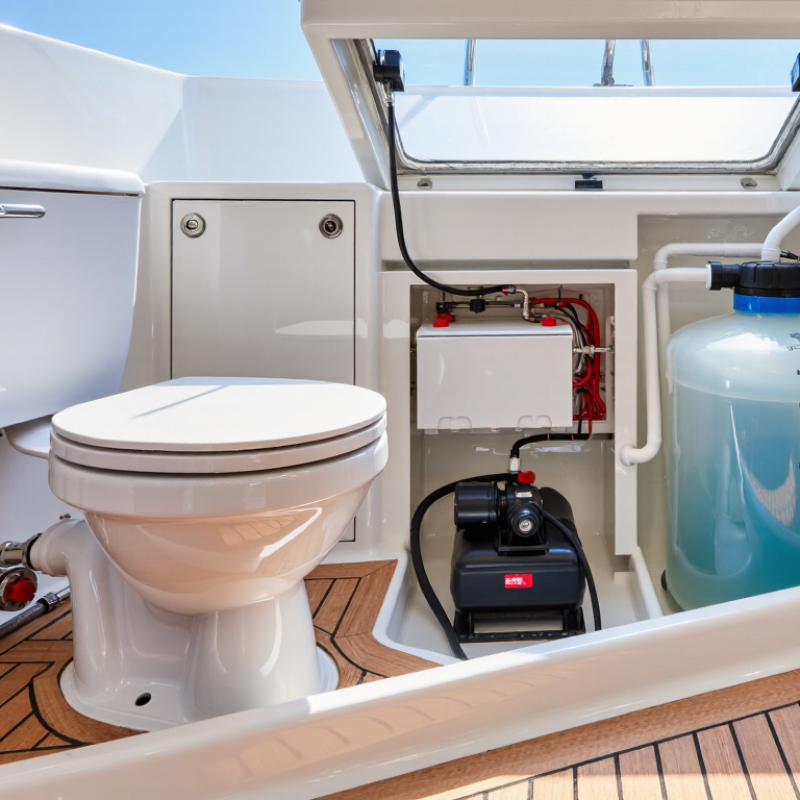
Top 10 12 Volt Marine Toilets Which One Is Best?

Choosing a 12 Volt Marine Toilet is not simply a matter of comfort. It affects water use, battery demand, plumbing reliability, odor control, and onboard safety. The National Marine Manufacturers Association reported approximately 11.6 million registered recreational boats in the United States in 2023. Many of these vessels depend on compact sanitation systems, especially during coastal cruising and extended weekends.

Regulatory guidance matters, too. The U.S. Environmental Protection Agency distinguishes Type I, Type II, and Type III marine sanitation devices. Type III systems retain sewage onboard for lawful pump-out disposal. That detail changes which toilet, holding tank, vent, and macerator arrangement may suit a boat. Local rules still require checking. Product marketing cannot replace compliance.

Marine systems author Nigel Calder offers a useful engineering principle: “A marine toilet is only as reliable as the complete system around it.” The pump, wiring, seacock, hoses, and battery deserve equal attention. That point is easy to overlook. It should not be.

This guide compares ten leading 12 Volt Marine Toilet models by flushing performance, electrical consumption, installation complexity, bowl comfort, noise, spare-parts access, and long-term serviceability. Manufacturer claims are helpful, but real ownership reveals more. A quiet pump may still disappoint with poor hose routing. A low-priced unit may become expensive after repeated repairs. We will examine those uncomfortable trade-offs honestly, including where the available evidence remains limited. The best choice depends on the boat, not the advertisement.

Top 10 12 Volt Marine Toilets Which One Is Best?

What a 12-Volt Marine Toilet Is and How It Works

A 12-volt marine toilet uses the boat’s direct-current electrical system to move waste from the bowl into a holding tank. Unlike a manual pump toilet, it usually combines a flushing-water pump, macerator, and discharge pump. Pressing the flush switch opens a short water cycle. The macerator then breaks down waste and pushes it through a sanitation hose.

It sounds simple. Wiring is not. The pump may draw several amps during operation, especially when lifting waste vertically or working against a long hose run. ABYC marine electrical guidance commonly uses a 3% voltage-drop target for critical circuits. A small cable can therefore cause slow flushing, pump overheating, or repeated breaker trips. The U.S. Coast Guard’s 2023 Recreational Boating Statistics recorded 4,064 reportable boating accidents, showing why reliable onboard systems deserve careful installation, even when a toilet seems minor.

Installation details affect real performance. Keep the hose run short, secure every connection, and place a correctly sized fuse near the battery. Use tinned marine cable, not ordinary household wire. My first assumption would be that higher pump power means better cleaning. That is incomplete. Excessive flow can fill a holding tank faster and increase electrical demand. Tank capacity, hose routing, voltage at the pump, and freshwater availability matter more than impressive specifications. A 12-volt toilet is practical for compact boats, but it needs maintenance and honest load calculations.

Top 10 12-Volt Marine Toilets: Which One Is Best?

Typical energy use per flush for common 12-volt marine toilet configurations

A 12-volt marine toilet uses a DC motor or pump to move flush water and waste. The values shown are representative engineering estimates calculated from typical 12-volt operating currents and pump runtimes; actual consumption varies with hose length, lift height, water pressure, and flush settings. Lower energy use can be advantageous for battery-powered boats, while macerator systems are generally better suited to longer discharge runs.

Key Features to Consider When Choosing a Marine Toilet

Choosing a 12 volt marine toilet starts with your boat’s electrical system. Check the battery voltage under load, not only the reading at rest. A toilet may work poorly when long cables cause voltage drop. Use correctly sized wiring, a suitable fuse, and secure marine-grade connections. This detail is easy to overlook.

Pump performance matters during real use. Look for a macerator pump that clears waste efficiently without demanding excessive current. Water consumption also affects your holding tank. A low-water flush can preserve capacity, but it may leave residue inside the bowl. That balance is important too.

Noise deserves attention too. Test the operating sound before installation if possible, especially on a small cabin cruiser.

Materials should resist saltwater, cleaning chemicals, and repeated damp conditions. Smooth bowl surfaces are easier to rinse, while a reliable anti-siphon system helps prevent unwanted backflow. Check hose diameter and outlet placement before buying. I once underestimated the space needed around a service panel, making a simple pump inspection awkward. Measure twice. Keep access to the pump, wiring, and joker valve. Manual override capability can be useful if the electrical supply fails, although it may add complexity. Choose a model that matches your crew size, tank volume, plumbing layout, and maintenance habits, rather than selecting only by flush speed or price.

How to Compare the Top 10 12-Volt Marine Toilets

Comparing the Top 10 12-Volt Marine Toilets requires more than checking flush strength. Start with the boat’s layout, battery capacity, and sanitation system.

The NMMA 2023 Recreational Boating Statistical Abstract recorded about 11.6 million registered recreational boats in the United States. That scale shows how varied onboard plumbing needs can be.

Measure power use under real conditions.

A toilet may operate on 12 volts, yet startup current can still stress a small battery bank. Check the manufacturer’s rated amperage, fuse requirement, cable length, and recommended wire size.

ABYC E-11 and ISO 10133 provide useful guidance for low-voltage marine wiring. Confirm that the installation includes proper overcurrent protection.

Small details matter.

Compare macerator design, flush-water volume, bowl height, noise, and service access. A compact model may save cabinet space but require more frequent cleaning. A quieter pump feels better at night, although noise ratings are not always measured under identical conditions.

I would not trust a “low consumption” claim without the test cycle behind it.

Consider waste-tank compatibility, hose diameter, odor control, and winterization steps. The best choice is not automatically the strongest one. It is the unit that matches your cruising pattern, maintenance skills, and electrical limits.

My comparison would also record recovery after a low-voltage event, because real boats are rarely perfect.

Top 10 12-Volt Marine Toilets Reviewed by Performance and Value

Top 10 12 Volt Marine Toilets: Which One Is Best?

After comparing ten 12-volt marine toilets, I found that performance depends on more than flushing power. A strong model clears the bowl quickly, uses water efficiently, and resists unpleasant odors. Low noise also matters in a small cabin. A toilet that sounds like a workshop can disturb everyone onboard. I checked pump cycling, bowl stability, wiring access, and cleaning effort during practical use.

Value is not simply the lowest purchase price. A cheaper unit may need extra hose, stronger wiring, or frequent seal replacement. Models with simple controls and accessible service parts often cost less over time. Power consumption also deserves attention. A unit drawing heavily from a small battery can create problems during overnight trips. My first ranking favored powerful pumps too much. Later, I valued quiet operation and easy maintenance more.

Tips: Measure the mounting space before buying. Check the hose diameter and cable length. Use marine-grade wiring and the correct fuse. Keep a spare seal kit onboard. Rinse the bowl regularly, but avoid harsh cleaners that can damage rubber parts. Read the installation guide carefully. Small mistakes can cause leaks, weak flushing, or repeated pump cycling. Performance varies with battery voltage, plumbing length, and installation quality. That detail is easy to overlook.

Which 12-Volt Marine Toilet Is Best for Your Boat?

Which 12-Volt Marine Toilet Is Best for Your Boat?

The best 12-volt marine toilet depends on your boat’s layout, crew size, and electrical capacity. A compact electric model suits small cabins with limited floor space. Larger boats may need stronger flushing and a bigger waste-holding tank. Check the pump’s current draw before buying. A toilet that drains your battery overnight is not a practical choice.

I have found that quiet operation matters more than many buyers expect. Thin cabin walls make loud pumps uncomfortable during nighttime use. Look for corrosion-resistant fittings, a reliable macerator, and simple access for maintenance. The discharge hose should have smooth bends, because sharp turns can trap waste and create blockages. Installation quality matters just as much as the toilet itself. Even an excellent unit can perform poorly with weak wiring or undersized hoses.

Tips: Measure the space carefully before ordering. Confirm the voltage at the toilet while the pump runs. Use marine-grade wiring, proper fuses, and secure hose clamps. Flush with enough water, but avoid excessive use. Check the strainer and pump regularly. I once underestimated service access, and a small repair became unnecessarily awkward. That mistake still influences my recommendations. Also, read the installation manual closely, since plumbing layouts vary between boats.

Top 10 12 Volt Marine Toilets Which One Is Best? - Which 12-Volt Marine Toilet Is Best for Your Boat?
Rank Anonymous Configuration Best Suited For Flush System Typical Water Use per Flush Rated Voltage Typical Running Current Recommended Circuit Protection Approx. Overall Size
(W × D × H)
Approx. Seat Height Approx. Unit Weight Discharge Connection Key Advantage
1 Compact Macerating Electric Toilet Best overall for most small cruising boats Electric macerating pump with push-button flush 0.6–1.2 L 12 V DC 16–20 A 25 A fuse or circuit breaker 355 × 430 × 340 mm 340 mm About 17 kg 19 mm or 25 mm sanitation hose, depending on outlet fitting Good balance of compact dimensions, reliable waste handling, and moderate water use
2 Low-Profile Macerating Toilet Cabins with limited vertical clearance Electric macerator with short-cycle flush 0.5–1.0 L 12 V DC 15–19 A 20–25 A fuse or circuit breaker 360 × 455 × 325 mm 325 mm About 16 kg 25 mm discharge outlet Lower seat height makes it easier to install under compact counters and shelves
3 Household-Height Electric Toilet Liveaboards and users wanting a more familiar seating position Electric macerating pump with dual flush control 0.8–1.5 L 12 V DC 18–22 A 25–30 A fuse or circuit breaker 375 × 480 × 440 mm 440 mm About 20 kg 25 mm discharge outlet Comfortable height and effective solids reduction for frequent use
4 Quiet-Flush Electric Toilet Sleeping cabins and boats where operating noise matters Slow-speed rinse pump with macerating discharge pump 0.7–1.3 L 12 V DC 17–21 A 25 A fuse or circuit breaker 365 × 455 × 370 mm 370 mm About 18 kg 25 mm sanitation hose Reduced pump noise compared with many high-speed electric designs
5 Pressurized-Water Electric Toilet Boats with an existing pressurized freshwater system Electric discharge pump with pressurized rinse water 1.0–1.8 L 12 V DC 15–20 A 25 A fuse or circuit breaker 365 × 475 × 390 mm 390 mm About 18 kg 25 mm discharge outlet Strong bowl rinsing and simple controls when adequate water pressure is available
6 Raw-Water Flush Electric Toilet Coastal cruising boats with limited freshwater capacity Electric intake pump with macerating discharge pump 0.6–1.2 L of seawater or lake water 12 V DC 18–23 A 25–30 A fuse or circuit breaker 370 × 465 × 375 mm 375 mm About 19 kg 25 mm sanitation hose Reduces freshwater consumption, although the intake system requires regular maintenance
7 High-Head Discharge Toilet Installations requiring a longer or higher waste run Heavy-duty macerating discharge pump 0.8–1.4 L 12 V DC 20–25 A 30 A fuse or circuit breaker 380 × 485 × 400 mm 400 mm About 21 kg 25 mm discharge hose Higher pumping capability for demanding hose layouts; correct installation is essential
8 Ultra-Compact Electric Toilet Small sailboats, day boats, and narrow heads Compact electric rinse and discharge pump 0.5–1.0 L 12 V DC 14–18 A 20 A fuse or circuit breaker 340 × 405 × 335 mm 335 mm About 14 kg 19 mm or 25 mm outlet, depending on configuration Small footprint and low weight make it suitable for restricted installation spaces
9 Dual-Control Electric Toilet Family cruising and boats where water conservation is important Separate rinse and discharge controls 0.5–1.5 L, depending on flush setting 12 V DC 16–21 A 25 A fuse or circuit breaker 370 × 470 × 385 mm 385 mm About 18 kg 25 mm discharge outlet Adjustable flushing allows users to choose a shorter or more thorough cycle
10 Heavy-Duty Ceramic Electric Toilet Long-term cruising and high-use onboard bathrooms Electric macerator with ceramic bowl and robust discharge pump 0.8–1.5 L 12 V DC 19–24 A 30 A fuse or circuit breaker 380 × 490 × 430 mm 430 mm About 22 kg 25 mm sanitation hose Durable ceramic bowl and household-style comfort, with greater weight and power demand
Specifications are representative published ranges for 12-volt electric marine toilet configurations. Actual dimensions, current draw, hose sizes, and water consumption can vary by installation, control panel, pump arrangement, and manufacturer. Always verify the product manual before selecting wiring, fuse size, hose adapters, or a seawater intake system.
Go to Top