Top 5 Battery Connector Options for Global Buyers?
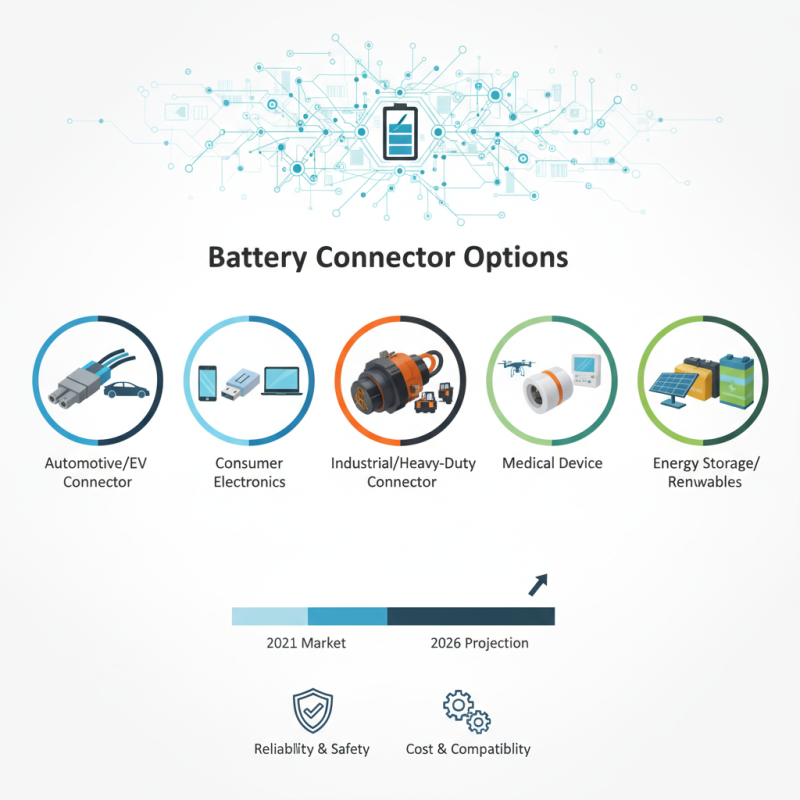
In today’s fast-evolving tech landscape, Battery Connectors play a crucial role. They facilitate the flow of electricity between battery packs and their respective devices. According to a recent market analysis by Research and Markets, the battery connector market is projected to reach USD 2.5 billion by 2026, highlighting their growing importance in various sectors.
Battery connectors come in various types, each serving different applications. For instance, automotive battery connectors are crucial for electric vehicles, a sector projected to grow at a CAGR of 22% from 2021 to 2028. This trend accentuates the need for reliable and efficient battery connectors that ensure safety and optimal performance. However, with so many options, selecting the right kind can be challenging. Manufacturers and purchasers must weigh the trade-offs between cost, durability, and compatibility.
Moreover, it’s essential to recognize that not every connector meets high standards. Some connectors might offer lower prices but could compromise quality or reliability. The consequences of choosing an inadequate battery connector can be severe, leading to inefficiencies and safety hazards. In an industry where performance is paramount, informed decisions are necessary for both buyers and sellers.
Top 5 Battery Connector Options for Global Buyers
When selecting battery connectors, global buyers have several options to consider. First, focus on the types that cater to diverse applications. A versatile connector enhances compatibility across various devices. The right choice can affect performance and safety. For instance, connectors need to withstand temperature variations and humidity levels.
Next, think about the design and configuration. Some connectors offer ease of installation. Others are better suited for high-current applications, ensuring efficiency. Yet, buyers must remain cautious about overlooked features. Quality and durability often come at a premium. It’s essential to balance cost with reliability, especially when working with critical technologies.
Lastly, consider sourcing connectors from reputable manufacturers. While many options exist, not every connector meets industry standards. Attention to detail can prevent costly failures down the line. Evaluate the specifications thoroughly. This ensures that you invest wisely in components that will last in demanding environments.
The Importance of Choosing the Right Battery Connector for Efficiency
Choosing the right battery connector is crucial for efficiency and performance in various applications. According to a recent report by industry analysts, around 30% of battery failures stem from poor connector choices. This statistic underscores the impact of selecting high-quality connectors on the longevity and reliability of battery systems.
Proper connector selection affects energy loss and heat generation. A suitable connector minimizes resistance and improves conductivity. Data from the Electrical Reliability Services indicates that connectors with lower resistance can enhance overall system efficiency by up to 15%. This is significant for applications in electric vehicles and renewable energy systems. In these scenarios, the right connector not only boosts efficiency but also extends the lifespan of critical components.
However, the market presents a variety of options, and not all connectors meet stringent industry standards. Some connectors may seem cost-effective initially but can lead to increased failure rates and maintenance costs. This brings attention to the need for careful evaluation of specifications and performance ratings. Ensuring compliance with relevant standards can mitigate risks and enhance efficiency in the long run.
Analysis of Market Trends in Battery Connector Technology (2023)
The market for battery connectors is evolving rapidly. According to a recent report by MarketsandMarkets, the global battery connector market is expected to grow from $2.3 billion in 2022 to $3.5 billion by 2027. This growth is driven by technological advancements and increasing demand in electric vehicles (EVs) and renewable energy sectors.
Current trends suggest that manufacturers are focusing on improving the efficiency and reliability of battery connectors. One significant development is the shift towards smaller and lighter connectors, enabling manufacturers to enhance the design of compact electronic devices. This is crucial as devices become more energy-dense and portable. Additionally, industry experts highlight the importance of thermal management in connector design. With the rise in battery temperatures, connectors must adapt to prevent failures and ensure safety.
Another interesting observation is the increased emphasis on sustainability. More manufacturers are exploring recyclable materials and environmentally-friendly designs. However, achieving a balance between functionality and ecological concerns remains a challenge. Reports indicate that while sustainability is often highlighted, the focus on rigorous performance metrics sometimes overshadows it. This ongoing tension invites further reflection on industry priorities.
Comparison of Standard Battery Connector Types: Pros and Cons
When choosing battery connectors, understanding the pros and cons of different types is essential. Standard connector types vary in design and functionality, affecting performance and reliability. One common type is the Molex connector. It offers ease of use and secure connections but can be bulkier than other options. This can be a drawback in compact applications.
Another popular option is the Anderson Powerpole connector. It excels in high-current applications and is modular, allowing customization. However, it may require additional tools for proper installation, which can deter some users. In contrast, the XT60 connector is lightweight and efficient for hobbyists and electronic enthusiasts. Yet, it may not sustain heavy-duty use over time.
In the realm of battery connectors, standard types like the JST connector provide compact solutions. They work well in small devices but might not handle high power demands efficiently. Users often find themselves grappling with compatibility issues when selecting connectors for various projects. This inconsistency calls for further research and careful selection based on specific needs. Understanding these aspects leads to informed decisions, ultimately enhancing product performance.
Top 5 Battery Connector Options for Global Buyers
| Connector Type | Pros | Cons | Common Applications |
| Anderson Powerpole | Versatile, modular design; high current capacity. | Can be bulky for small applications. | RC hobby, electric vehicles, solar applications. |
| XT60 | Low resistance; ideal for high discharge applications. | Limited to specific current ratings. | Drones, RC vehicles. |
| Deans (T-Plug) | Compact size; strong connection. | Not the easiest to connect/disconnect. | Hobby electronics, RC racing. |
| JST Connector | Compact and lightweight; reliable. | Lower current capacity than others. | Battery packs in small electronics. |
| Molex Connector | Versatile; many variations for different uses. | Can be complicated to install and manage. | Consumer electronics, automotive applications. |
Key Manufacturers and Their Innovations in Battery Connector Solutions
Battery connectors play a pivotal role in energy storage solutions across diverse applications. In recent years, innovative designs have emerged to enhance efficiency and reliability. According to a recent report by Research and Markets, the global battery connector market is projected to exceed $1 billion by 2025.
Key manufacturers focus on various aspects of design. They utilize advanced materials to improve conductivity and reduce charging times. For example, some companies have developed connectors with lower resistance values. This results in a significant increase in overall performance. The trend of miniaturization in electronics has pressured manufacturers to create more compact yet robust connectors.
Tips: When selecting connectors, consider the voltage and current ratings carefully. A mismatch can lead to reduced performance or even safety hazards. Additionally, check for certifications that ensure compliance with industry standards.
Innovation continues to disrupt the market. New techniques in soldering and assembly have increased connector durability. However, not all products meet high reliability standards. Buyers should conduct thorough research to avoid subpar options. It's important to investigate the lifecycle and warranty specifics before making a purchase. This will help ensure the longevity and dependability of your energy solutions.
Conclusion
The article "Top 5 Battery Connector Options for Global Buyers" highlights the critical role of selecting the appropriate battery connector to enhance efficiency in various applications. It outlines the latest market trends in battery connector technology as of 2023, showcasing the evolving landscape and innovations that are shaping the industry. The comparison of standard battery connector types elaborates on their respective pros and cons, providing valuable insights for buyers.
Furthermore, the article emphasizes the importance of cost-effectiveness in battery connector options, particularly for global supply chains. By examining key manufacturers and their innovative solutions, it underscores the need for buyers to consider not just performance, but also economic viability when making their choices. Ultimately, the report serves as a comprehensive guide for global buyers aiming to navigate the diverse options available in the battery connector market.