Why Use a Chemical Storage Cabinet?
In laboratories, workshops, and maintenance rooms, chemical containers need more than a shelf. A Chemical Storage Cabinet provides a controlled, visible place for compatible products. Its steel walls, spill-retaining base, and adjustable shelves can reduce everyday exposure risks. The value is practical: labels stay readable, containers remain upright, and access becomes easier to manage. Small details matter. Not a magic shield.
Practical safety inspections show how clutter creates avoidable mistakes. A bottle hidden behind equipment may be missed during stock checks. A poorly supported container can fall when another item is removed. A suitable cabinet helps separate incompatible chemicals and keeps work surfaces available for clean tasks. However, cabinet selection requires professional judgment, not just a strong-looking door. Ventilation needs, fire performance, shelf load, container compatibility, and site conditions all deserve review. Manufacturer guidance and current workplace procedures should guide the final choice.
Reliable storage also depends on people. Staff need clear labels, routine inspections, and training for spills or damaged packaging. The cabinet should never become a forgotten cupboard. Regularly checking dates, closures, corrosion, and capacity reveals problems early. Labels fade. Checks still matter. A Chemical Storage Cabinet cannot replace risk assessment or responsible handling. Its real benefit appears when equipment, procedures, and trained decisions work together. Even experienced teams can overlook small weaknesses during busy periods. Honest review keeps storage safer, more organized, and easier to manage.
What Is a Chemical Storage Cabinet?
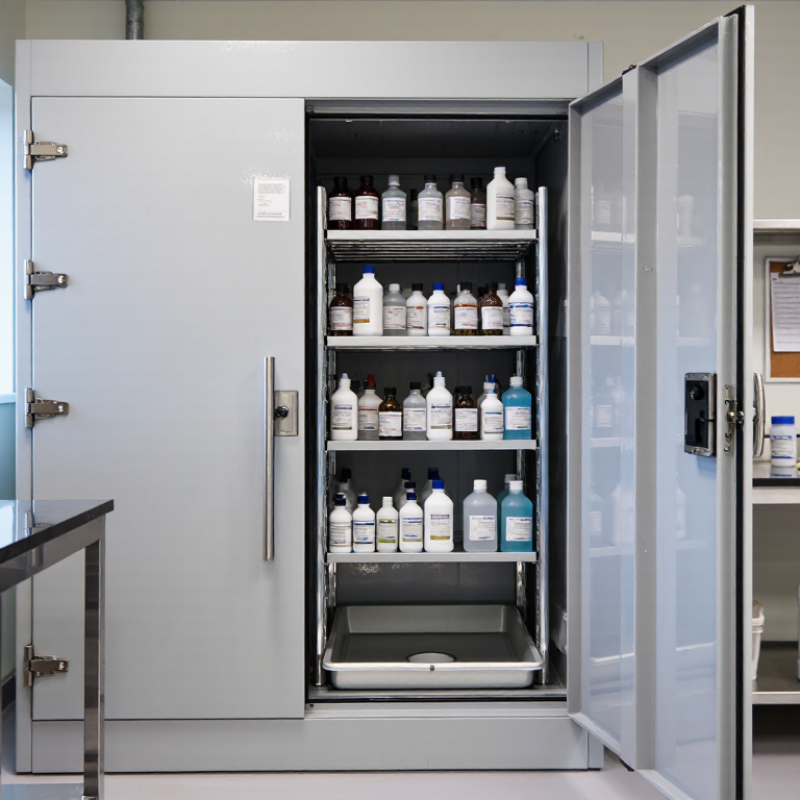
A chemical storage cabinet is a purpose-built enclosure for holding chemicals safely and in an organized way. It is not an ordinary cupboard. Its materials, shelves, doors, and spill-control features are selected for specific storage risks. Some cabinets are designed for flammable liquids, while others suit corrosive or general laboratory chemicals. One cabinet cannot safely store everything.
Inside, adjustable shelves keep containers stable and separated. A raised base or leak-proof tray can collect small spills before they reach the floor. Secure doors reduce unauthorized access and limit container movement. For certain hazards, the cabinet may include fire-resistant construction, self-closing doors, or grounding provisions. These features depend on the cabinet type and its tested design.
Details matter.
Correct storage also requires checking the safety data sheet, container labels, and chemical compatibility. Acids should not share space with incompatible substances, even when both containers appear sealed. In a busy workplace, poor labeling can turn a tidy cabinet into a serious risk. I have seen storage plans fail because users focused on cabinet size rather than chemical behavior. That is an easy mistake. A cabinet reduces exposure and spill consequences, but it does not replace inspections, staff training, or sensible quantities. Keep containers upright, inspect shelves for damage, and remove unidentified materials through approved procedures. Never assume a locked door makes unsafe storage acceptable.
Which Chemical Hazards Require Specialized Storage?
Why Use a Chemical Storage Cabinet?
Not every chemical belongs on an open shelf. Flammable liquids, corrosives, oxidizers, toxic substances, and reactive chemicals can create different hazards. Each needs a storage approach that limits ignition, leaks, incompatible contact, or harmful exposure.
OSHA 29 CFR 1910.106 allows a flammable-liquid cabinet to hold up to 60 gallons of Category 1, 2, and 3 liquids, including no more than 3 gallons of Category 1 liquids. Category 4 liquids have separate limits. These figures are practical controls, not permission to fill every cabinet. NFPA 30 also stresses separation, approved containers, and control of ignition sources. A cabinet for solvents cannot safely store oxidizers beside acids. Corrosives may attack metal shelves, hinges, or nearby containers. Toxic chemicals require secure access and effective inventory control. Compressed gas cylinders need purpose-built restraint and ventilation, not a standard cabinet.
Tips: Read the Safety Data Sheet before storage. Check the hazard class, not just the product name. Use secondary containment for liquids. Keep acids away from bases and oxidizers away from organics. Label shelves clearly. Leave space for inspection. NIOSH guidance supports reducing exposure at the source, but storage alone cannot replace ventilation, training, or spill planning.
In daily use, small details matter. A damp cabinet floor can reveal a slow leak. A warm cabinet can signal poor placement. One overlooked incompatibility can defeat an otherwise careful system. Local fire codes may be stricter than federal requirements, so review them with a qualified safety professional.
Why Use a Chemical Storage Cabinet? — Which Chemical Hazards Require Specialized Storage? | Hazard Category | Common Examples | Appropriate Storage Approach | Why Specialized Storage Matters |
| Flammable liquids | Acetone, ethanol, gasoline, and many solvent-based products | Use a properly rated flammable-liquid cabinet where required. Keep containers closed and away from heat, sparks, flames, and oxidizers. | Helps limit exposure to ignition sources and can reduce fire spread. The cabinet does not eliminate the need for safe handling and fire controls. |
| Corrosive acids | Hydrochloric acid, nitric acid, and sulfuric acid | Store in compatible, corrosion-resistant secondary containment. Separate acids from bases; keep nitric acid and other strong oxidizers apart from organic or combustible materials. | Leaking or incompatible chemicals can cause severe burns, heat, fire, or hazardous reactions. Acid compatibility varies by chemical. |
| Corrosive bases | Sodium hydroxide and potassium hydroxide solutions | Use compatible containers and secondary containment. Segregate from acids and check the safety data sheet (SDS) for material compatibility. | Contact with acids can generate heat and splashing; some bases can also damage storage materials. |
| Oxidizers | Hydrogen peroxide, potassium permanganate, and some nitrates | Store in a clean, dry, compatible area, separated from flammables, combustibles, and reducing agents. Follow the SDS for concentration-specific requirements. | Oxidizers can intensify fires or react vigorously with incompatible substances. |
| Water-reactive chemicals | Sodium metal, calcium carbide, and some organometallic compounds | Keep dry in tightly closed, compatible containers under the conditions specified by the SDS. Protect from water and incompatible materials. | Contact with water or moisture may release heat or flammable or toxic gases. Some substances need specialized inert-atmosphere storage. |
| Acute or chronic toxic substances | Certain pesticides, toxic metal compounds, and highly toxic laboratory reagents | Use secure, clearly labeled storage with access controls and secondary containment as appropriate. Provide ventilation only when required by the SDS or storage design. | Secure storage and containment help reduce exposure, spills, and unauthorized access. Requirements depend on the substance and applicable rules. |
| Compressed gases | Oxygen, acetylene, and toxic or corrosive gas cylinders | Secure cylinders upright with suitable restraints and valve protection. Separate incompatible gases and use a purpose-designed ventilated cabinet when required. | Cylinders can become dangerous if damaged or heated; leaking gases may create fire, oxygen-enrichment, asphyxiation, or toxicity hazards. |
Important: A cabinet is not a substitute for chemical segregation. Always check the current SDS, container compatibility, and applicable local fire, building, and occupational-safety requirements before choosing storage.
How Do Chemical Cabinets Prevent Accidents and Exposure?
Why Use a Chemical Storage Cabinet?
How Do Chemical Cabinets Prevent Accidents and Exposure?
A chemical storage cabinet helps keep hazardous liquids contained, organized, and separated from everyday work areas. Its closed doors reduce casual contact, while compatible shelving and secondary containment can limit leaks from reaching floors or drains. That matters when a bottle tips or a cap loosens. Small failures happen.
The U.S. Bureau of Labor Statistics recorded 5,486 fatal work injuries in 2022 across all industries; this figure is not specific to chemical incidents, but it underscores why workplace hazards need practical controls. OSHA’s laboratory standard, 29 CFR 1910.1450, calls for reducing employee exposure through appropriate work practices and equipment. A cabinet supports that approach, but it cannot replace ventilation, labeling, training, or correct handling. Nor does it make incompatible chemicals safe to store together.
Choose a cabinet designed for the chemicals and quantities involved, and follow its manufacturer’s storage guidance. Keep containers upright, close doors after use, and inspect shelves and sumps for residue or corrosion. Segregate incompatible materials rather than relying on separate bottles alone. A cabinet can slow a spill and reduce routine exposure; it will not prevent every incident. That limitation deserves attention.
What Features Make a Chemical Storage Cabinet Effective?
Why Use a Chemical Storage Cabinet?
What Features Make a Chemical Storage Cabinet Effective?
A chemical storage cabinet provides a controlled place for hazardous materials. It reduces exposure to heat, spills, and accidental contact. However, a cabinet is not automatically safe because it looks strong. Effective storage begins with chemical compatibility. Separate acids, bases, oxidizers, flammables, and reactive substances according to their safety data sheets.
Construction matters. A durable steel body resists impact and supports long-term use. Adjustable shelves help workers keep containers upright and visible. Each shelf should hold the expected load without bending. Spill-retaining trays can limit leaks, while secure doors reduce unauthorized access. Clear labels support quick identification during inspections or emergencies. Some materials also require fire-resistant storage or controlled ventilation. Ventilation decisions should follow the safety data sheet and a site assessment. Poor ventilation can create another hazard. This detail is sometimes overlooked.
Tips: Check shelf capacity before loading. Keep containers closed. Leave space around each bottle. Inspect corrosion, damaged seals, and unreadable labels regularly. Do not store incompatible chemicals together, even when the cabinet has extra room. A crowded cabinet may appear efficient, but it makes mistakes more likely. Records should match the cabinet’s actual contents, not an old inventory list.
How Should Chemicals Be Organized and Maintained Safely?
Chemical storage depends on organization, not simply owning a cabinet. Store chemicals by compatibility, never by alphabet. Keep acids away from bases, oxidizers away from fuels, and reactive materials in separate approved areas. Read each safety data sheet before assigning a storage location. Its guidance may override general habits.
Use clear labels showing the chemical name, hazard information, and date received. Keep containers upright, tightly closed, and inside leak-resistant secondary containment. Place heavy bottles on lower shelves. Avoid overfilling the cabinet. Leave space for safe handling and inspection. Keep aisles clear, and restrict access to trained personnel.
Small details matter. During routine checks, look for rust, damaged caps, faded labels, crystals, or unusual odors. Remove deteriorating containers through an approved waste process. Do not store food, personal items, or unneeded equipment nearby. Maintain a current inventory, but question it regularly. An inventory that looks accurate may still hide expired or misplaced materials.
Keep the cabinet closed when not in use. Do not add ventilation equipment without competent technical guidance, because unsuitable airflow can create new hazards. Post emergency contacts and keep spill-control materials accessible. Staff should know the evacuation route, eyewash location, and reporting procedure. Training can feel repetitive. It is still where many preventable mistakes become visible.
Why Use a Chemical Storage Cabinet?
Flash point is a key factor when organizing flammable chemicals. Lower values indicate that a liquid can produce ignitable vapor at a lower temperature, so it generally requires stricter segregation, ventilation, and approved flammable-liquid storage.
Approximate closed-cup flash points in degrees Celsius. Values may vary by test method, purity, and supplier. Always follow the current Safety Data Sheet and applicable regulations.